


Benin Bronzes history reaches far beyond the story of “old African art.” These works form a royal archive in metal: records of kings, ceremonies, warfare, diplomacy, belief and memory, made by generations of Edo artists in the Kingdom of Benin. In 1897, British forces invaded Benin City, burned parts of the royal palace and carried thousands of objects away. More than a century later, the Bronzes sit at the centre of a worldwide argument about history, ownership and return.
To understand why these works matter, we have to begin before the museum glass—inside the palace courtyards where they once lived.
What are the Benin Bronzes?
The name “Benin Bronzes” describes thousands of historic objects made for the royal court of the Kingdom of Benin, in what is now Edo State, Nigeria. They are associated with Benin City and the Edo people—not with the modern Republic of Benin, Nigeria’s western neighbour.
The label can also be misleading because the collection is not made only of bronze. It includes cast-brass plaques and commemorative heads, ivory carvings, ceremonial weapons, bells, coral regalia, wooden objects and other works. Many of the famous palace plaques are actually made from leaded brass. They were produced across several centuries, with the best-known plaques generally dated to the sixteenth and seventeenth centuries.
These were not decorative curiosities. Some honoured royal ancestors on palace altars. Some recorded court ranks, rituals and victories. Others showed the Oba—the king of Benin—surrounded by attendants, warriors, officials or foreign visitors. Together, they formed a visual language of power and continuity.
The Benin Bronzes were history, law, spirituality and royal memory made visible.
Who made the Benin Bronzes?
The works were created by highly trained Edo artists, many organised into hereditary palace guilds. The brass casters’ guild is known as Igun Eronmwon (also written Ìgùn Ẹ́rọnmwọ̀n). Its members worked under royal patronage and produced objects for the Oba and the court.
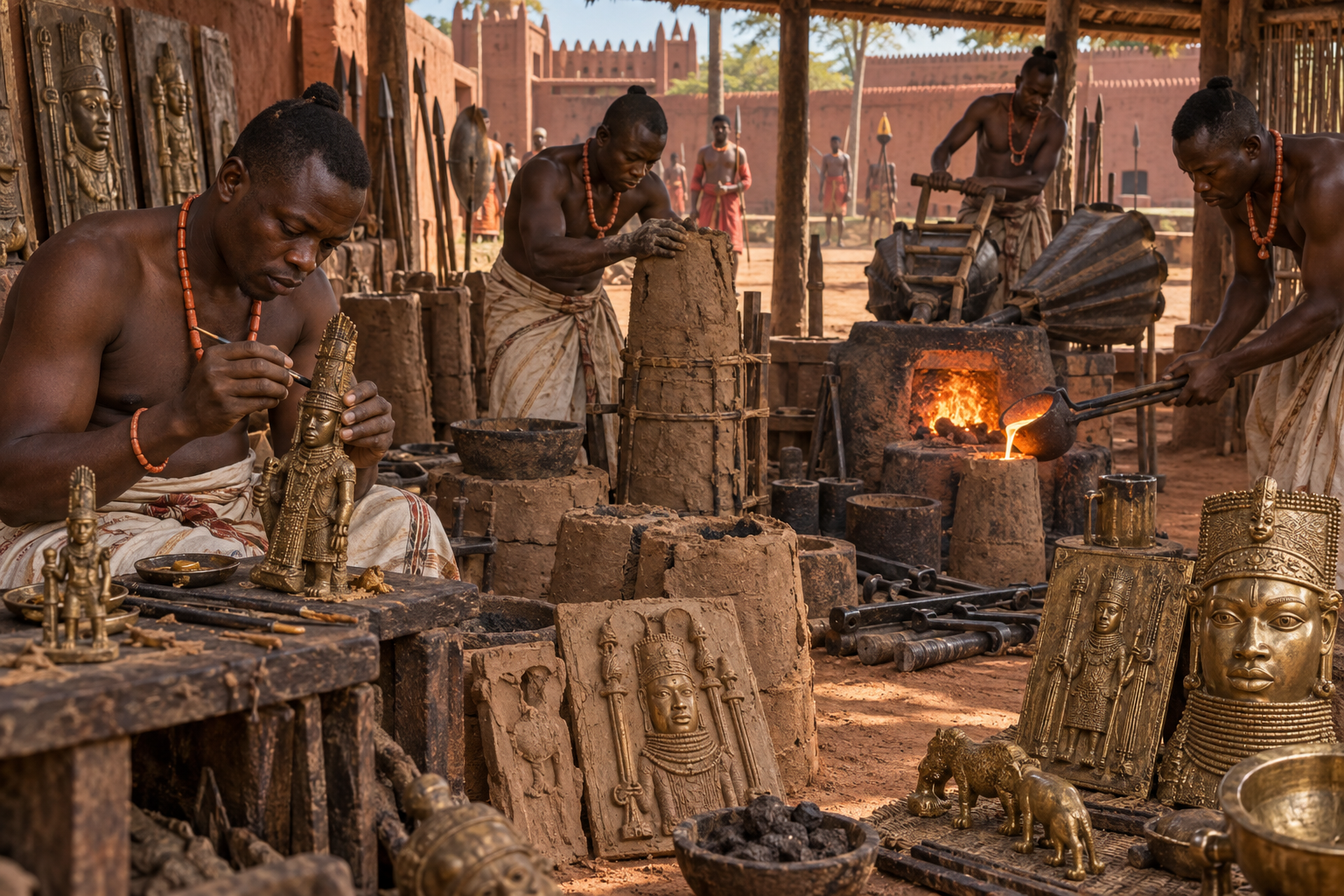
One of their principal methods was lost-wax casting. An artist first modelled a form in wax, covered it in layers of clay and heated the mould so the wax drained away. Molten metal was then poured into the space left behind. When the clay was broken open, the casting emerged as a unique work that could be refined and finished. Because the mould was destroyed, an intricate plaque or head was not a mass-produced copy; it carried the decisions and skill of its maker.
The sophistication of these works did not begin with European contact. Benin belonged to a wider West African world of advanced metalworking that included Ife and Igbo-Ukwu. Contact with Portugal from the late fifteenth century did, however, alter Benin’s access to metals. European traders brought copper-alloy manillas and other materials, while Benin exchanged commodities and developed diplomatic relations with Portugal. Portuguese figures appear on some plaques—not as the centre of Benin’s story, but as participants in a world ordered around the Oba.
What did the plaques mean inside the palace?
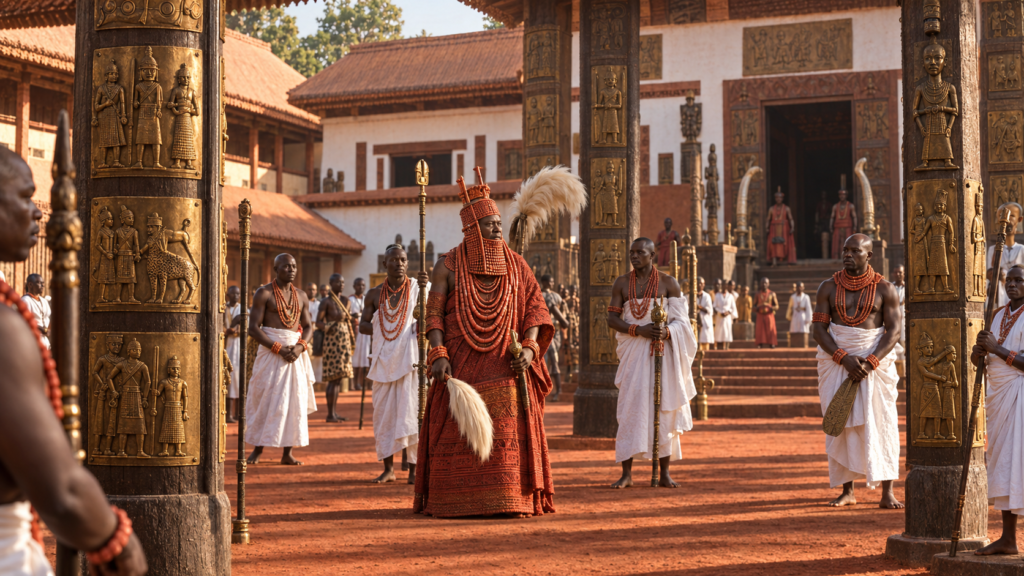
Today, a plaque may appear alone on a clean museum wall. In Benin, it belonged to an architectural and ceremonial system. Accounts and surviving evidence indicate that rows of plaques were fixed to wooden pillars around palace courtyards. Seen together, they turned royal space into a monumental record of the kingdom.
Scale communicated rank. The Oba might appear larger than the people beside him. Coral beads signalled wealth, authority and connection to the sea deity Olokun. Leopards evoked royal power. Mudfish, able to live in water and on land, could express the Oba’s ability to move between human and spiritual realms. A viewer familiar with Benin court life was not looking at random ornament. They were reading a carefully constructed political and sacred vocabulary.
Commemorative brass heads served a different but related purpose. Placed on ancestral altars, they honoured departed Obas and supported the living king’s relationship with his predecessors. Carved ivory tusks could rise from these heads, adding layers of historical and ritual imagery. The palace was therefore more than a royal residence. It was an institution where art helped preserve memory, legitimate authority and connect generations.
Why did Britain invade Benin in 1897?
By the late nineteenth century, Britain was expanding political and commercial control across the Niger region. Benin remained an independent kingdom and the Oba controlled important trade routes and commodities. British officials and merchants increasingly regarded that sovereignty—and Benin’s restrictions on trade—as an obstacle.
In January 1897, Acting Consul-General James Phillips led a party toward Benin City. Oba Ovonramwen had asked the delegation to delay because major ceremonies were taking place. Phillips continued. Edo forces ambushed the party, killing Phillips and most of the European members as well as many African carriers.
Britain answered with a much larger military force in February. Contemporary officials called it a “punitive expedition,” language that framed conquest as punishment. The wider record shows more: a colonial power had long wanted greater access to Benin’s markets, territory and authority. The killings became the immediate justification for an invasion that ended the kingdom’s political independence.
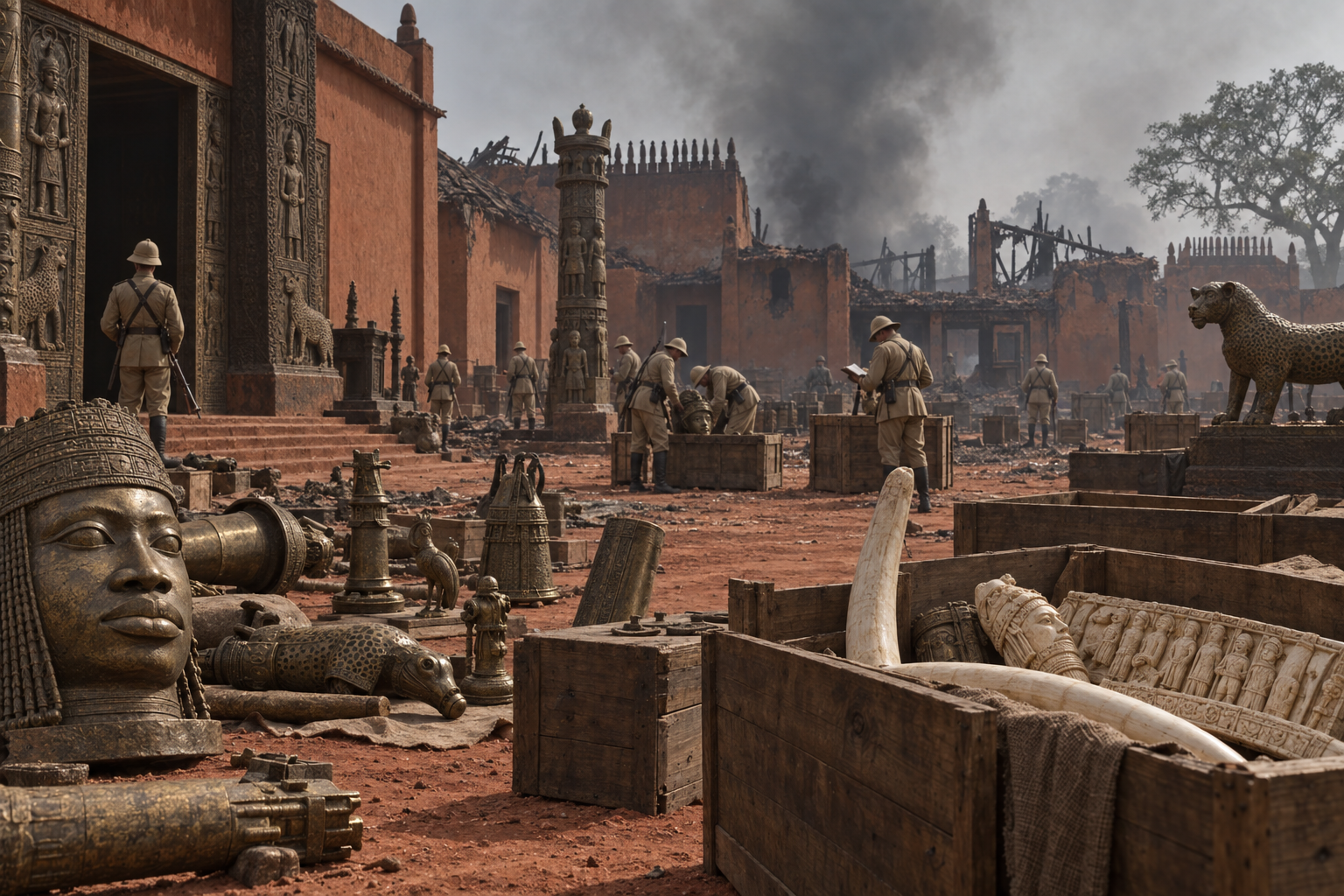
British troops captured Benin City after sustained fighting. The palace and other buildings were burned or damaged. Oba Ovonramwen was later exiled to Calabar. Chiefs were executed. Most consequentially for the world’s museums, soldiers removed royal and sacred objects on an enormous scale.
How the Bronzes were looted and scattered
The objects taken in 1897 included plaques, royal heads, ivory tusks, altarpieces, regalia and everyday court items. Some were claimed by officers as personal shares. Others were sent to Britain and sold. The sale helped offset the cost of the invasion, converting Benin’s cultural inheritance into both trophies and finance for colonial conquest.
In the autumn of 1897, the British Museum displayed 304 plaques borrowed from the British Foreign Office. It later received 203 of them. Other works passed through dealers, auctions and private collections before entering museums across Britain, Germany, Austria, the United States and elsewhere.
The scale of that dispersal is now easier to see. Digital Benin, a research platform connecting museum records with Edo knowledge and oral history, currently documents more than 5,300 objects across 139 institutions in 21 countries. The British Museum alone says it cares for more than 900 objects from the historic Kingdom of Benin.
Why were Europeans so astonished by the Bronzes?
When the looted objects arrived in Europe, their technical and artistic power contradicted racist colonial ideas about Africa. Some Europeans responded by searching for an outside explanation, attributing the works to Portuguese influence or another supposedly “lost” civilisation. That reaction revealed more about European prejudice than about Benin art.
The evidence was in front of them: these were Edo works, produced by artists whose knowledge had been cultivated within Benin’s institutions and passed between generations. The Bronzes did not prove that Africans could make sophisticated art. Benin had never needed to pass that test. The objects exposed the false assumptions of the people judging them.
Where are the Benin Bronzes now?
They remain dispersed. Large groups are held by the British Museum, Berlin’s Ethnologisches Museum and other European and North American collections. Many are in storage rather than on display. Some remain in private hands. Others have returned to Nigeria or had their legal ownership transferred while staying abroad temporarily under loan agreements.
The Smithsonian provides one important example. In October 2022, its National Museum of African Art transferred ownership of 29 works linked to the 1897 raid to Nigeria’s National Commission for Museums and Monuments. Twenty returned to Nigeria; with permission from the Kingdom of Benin, nine remained in Washington on long-term loan. That distinction matters: a Nigerian-owned object may still be exhibited overseas, but the power to decide no longer rests solely with the institution that held it.
Have the Benin Bronzes been returned?
Some have. Universities, museums and governments in several countries have returned works or transferred title to Nigerian ownership. But “the Benin Bronzes” are not one collection under one law. Each institution has its own holdings, provenance records and legal constraints. Returns therefore happen object by object or through negotiated groups, not through one global decision.
Restitution also raises practical questions: Who should hold legal title? Where should returned objects be housed? How should the authority of the Nigerian state, the Oba of Benin, Edo communities, museums and scholars relate to one another? Those debates can be difficult, but they do not erase the central historical fact: the great dispersal began with a violent colonial seizure.
Why return matters beyond museum ownership
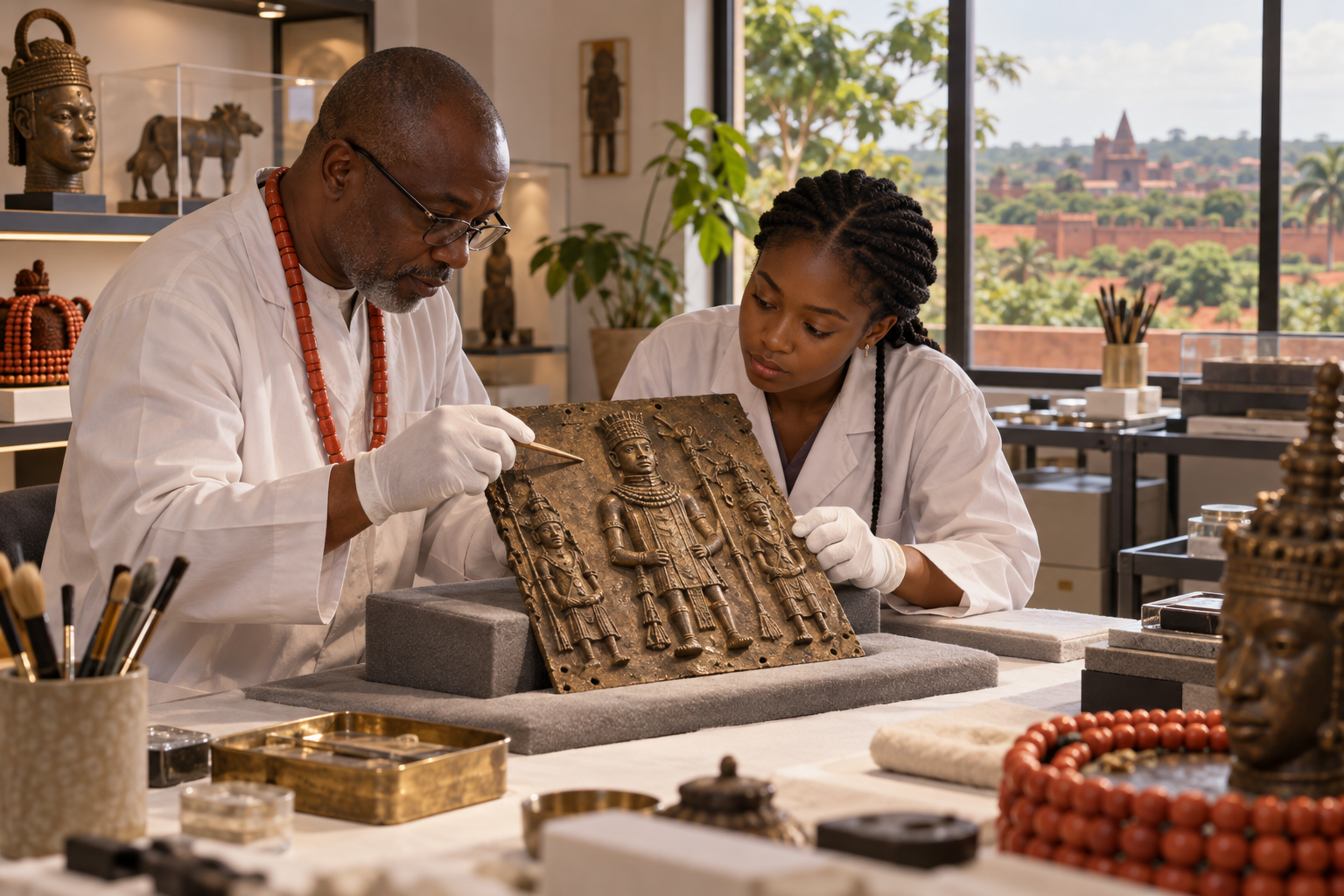
A museum label can name a material, date and accession number. It cannot fully replace the relationships that gave an object meaning. In Benin, royal works connected artists, ancestors, title-holders, ceremonies and the authority of the Oba. Removal broke those relationships and scattered the record of a civilisation across the world.
Return creates the possibility of repair, but it is not the end of the story. Conservation, research, exhibition, education and access all matter. Digital Benin’s Edo-language catalogue and oral histories show what becomes possible when knowledge from museums is reconnected with knowledge from the community of origin.
There is also a deeper lesson. The Bronzes are often discussed as survivors of 1897, but Benin culture is not frozen in the year of invasion. The monarchy endures. Guild traditions continue. Contemporary artists create new work. Festivals, language and court institutions carry memory forward. The story is not only about what was taken. It is about what could not be erased.
Wear a story that still lives
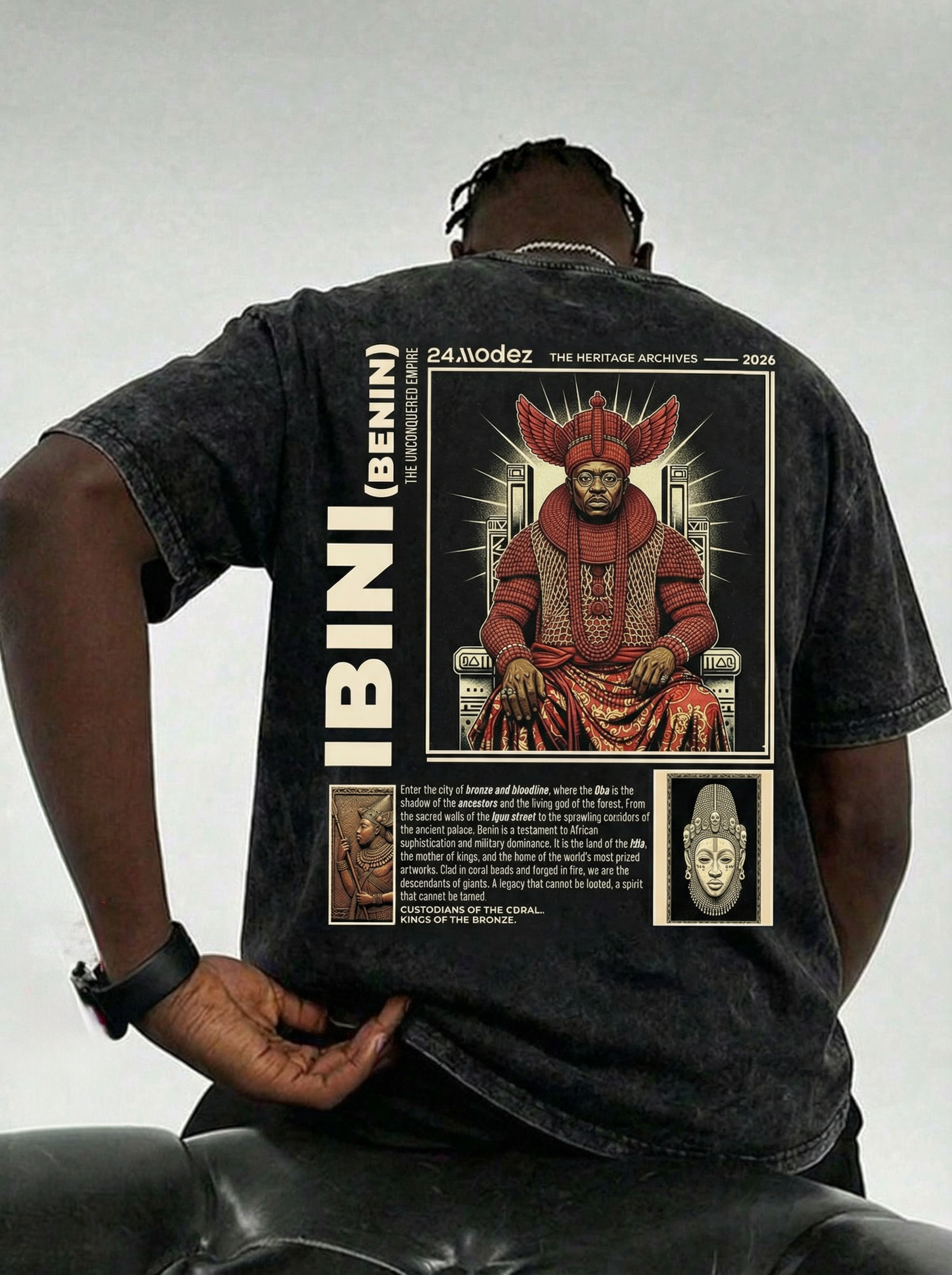
The ÌBÌNÌ Heritage Mode carries the artistry, authority and endurance of the Kingdom of Benin into the present. Read the cultural story, then explore the piece created to keep that heritage in motion.
Frequently asked questions about the Benin Bronzes
Are the Benin Bronzes from the Republic of Benin?
No. They come from the historic Kingdom of Benin, centred on Benin City in present-day Edo State, Nigeria. The modern Republic of Benin is a separate country to Nigeria’s west.
Are all the Benin Bronzes made of bronze?
No. The term covers brass and bronze castings as well as ivory, wood, iron and other materials. Many famous palace plaques are made of leaded brass.
Who made the Benin Bronzes?
Edo artists working for the royal court made them. Brass works were associated with the Igun Eronmwon guild, whose artisans used highly skilled methods including lost-wax casting.
Why did Britain take the Benin Bronzes?
British forces looted them during the invasion and occupation of Benin City in 1897. Objects were treated as official spoils, distributed to officers or sold; some sales helped cover the expedition’s costs.
How many Benin Bronzes exist?
There is no single final count. Digital Benin currently connects records for more than 5,300 historic objects in 139 institutions across 21 countries, while additional objects remain in private collections or have incomplete records.
Will all the Benin Bronzes return to Nigeria?
There is no single worldwide process, so the outcome depends on the laws and decisions governing each collection. Returns and transfers of ownership have increased, while many objects remain abroad.
Sources and further reading
- British Museum: Benin Bronzes
- Digital Benin: global catalogue, oral histories and Edo knowledge
- Smithsonian National Museum of African Art: Benin Bronzes—Ambassadors of the Oba
- Smithsonian: return of 29 Benin works to Nigeria
- The Metropolitan Museum of Art: Igun Eronmwon guild artwork record
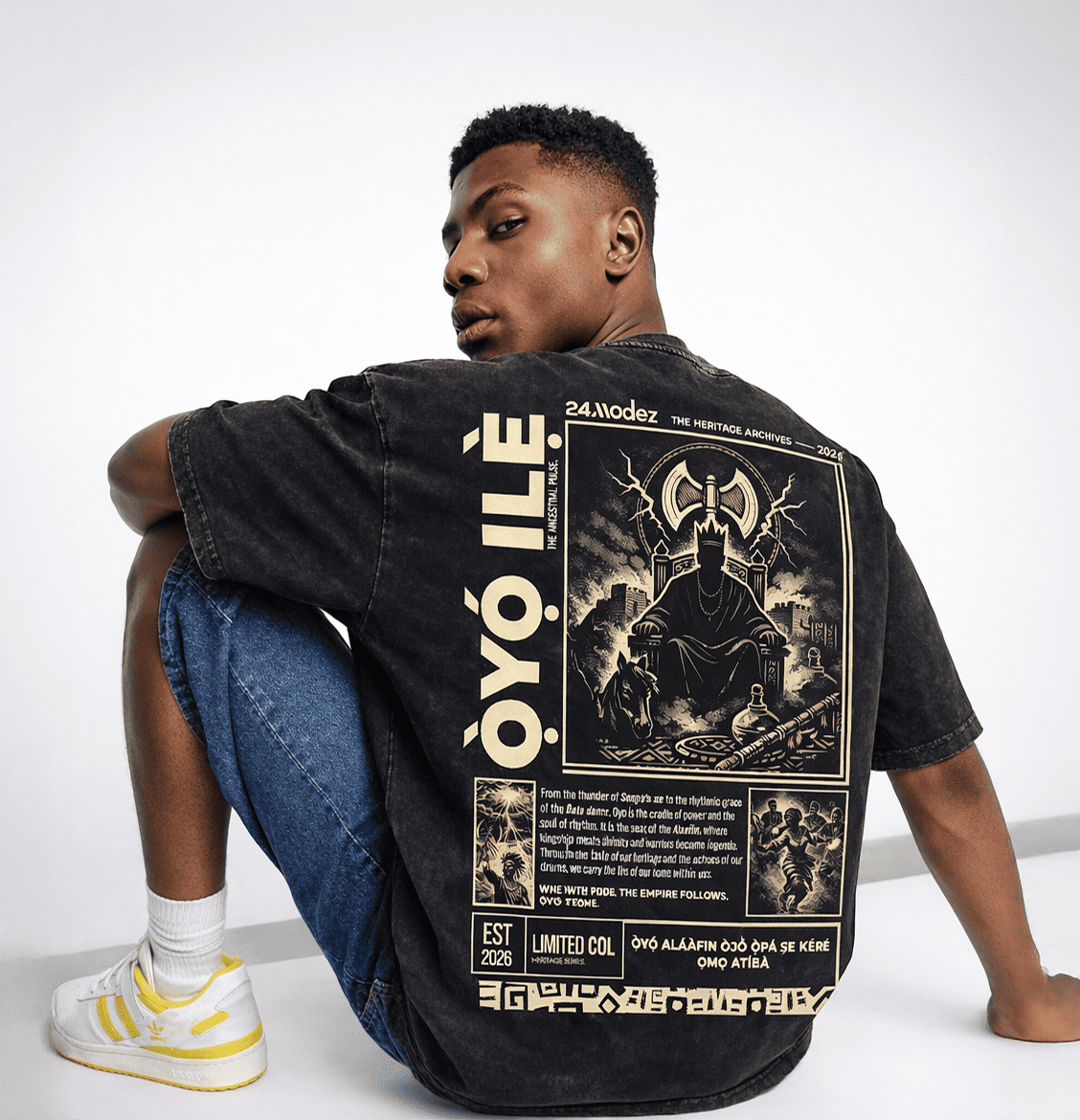
Image note: The original illustrations in this article are historically informed visual interpretations created for 24Modez; they are not archival photographs.