



The Oyo Empire History, Rise, Fall and the Legacy That Never Died
One of West Africa’s most powerful civilisations had built-in checks on royal power centuries before most of Europe did. Most people do not know this story. Here is everything.
When people talk about great empires, the conversation often skips West Africa. That is a gap worth closing. The Oyo Empire — at its peak one of the largest and most sophisticated states in sub-Saharan Africa — operated with a level of political complexity, economic sophistication, and cultural output that demands to be studied, known, and remembered.
This is the full story: the founding, the rise to dominance, the political system that was centuries ahead of its time, the military power that made neighbours tremble, the trade networks that built real wealth, the culture that still echoes in modern music, and the fall that scattered an empire across the world.
~1300 - Approximate founding of Oyo Kingdom
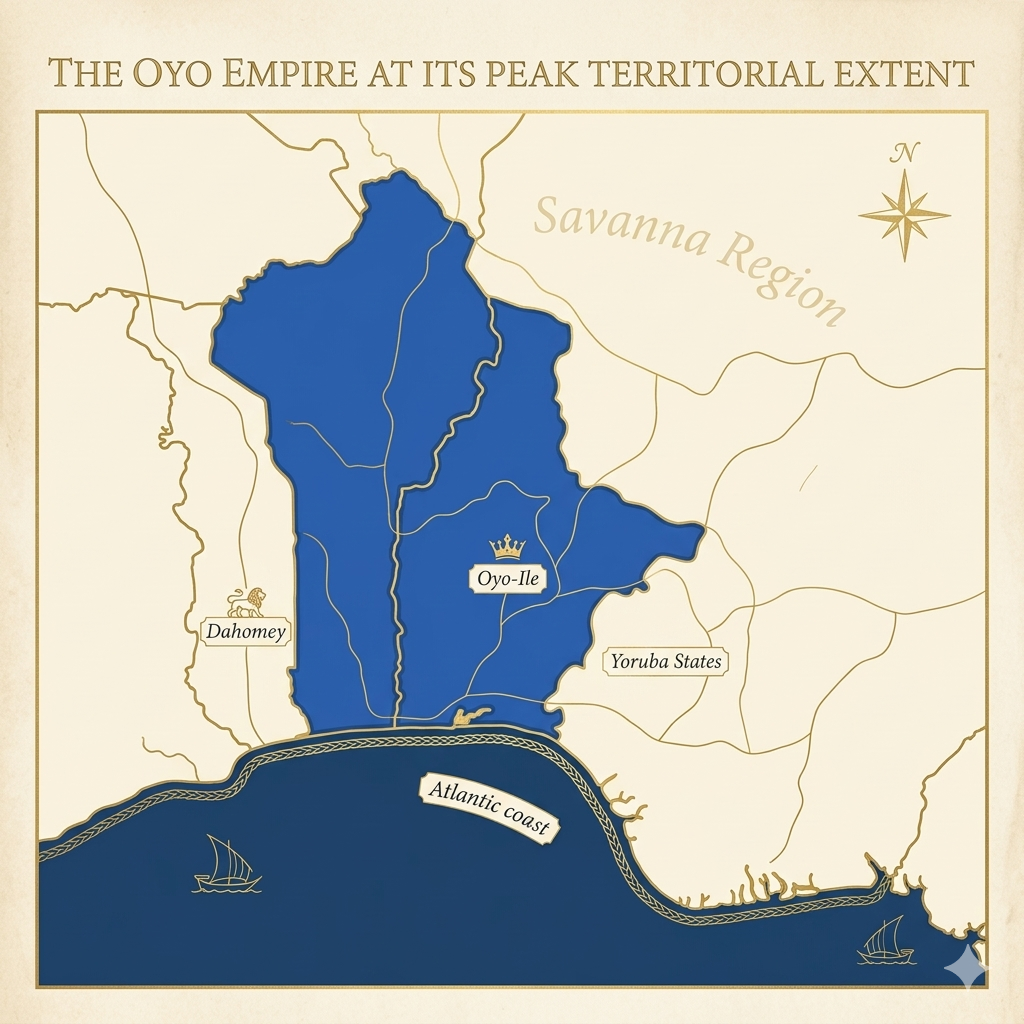
1600s to 1800s - Peak of Oyo imperial power3 Nations – Modern territory at peak: Nigeria, Benin, Togo
UNESCO - Recognised heritage: the Bata drum, born in OyoWhat Was the Oyo Empire? An Overview
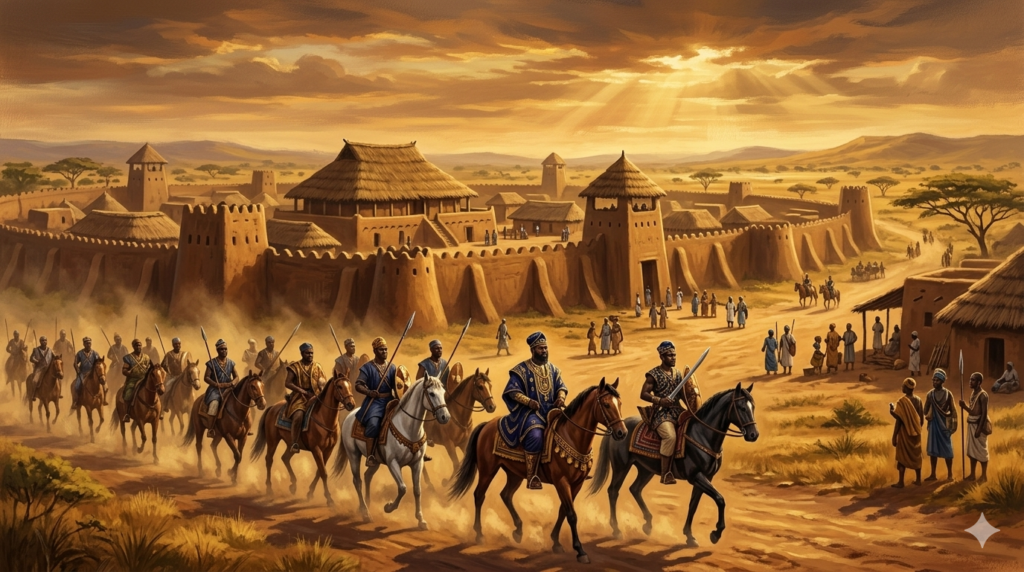
The Oyo Empire (also written as Ọyọ) was a Yoruba empire located in what is today southwestern Nigeria, with territory extending into modern Benin Republic and Togo. It emerged from the earlier Oyo Kingdom, traditionally founded by the legendary Oranyan (Oranmiyan), a prince of the ancient city of Ile-Ife, considered the spiritual homeland of the Yoruba people.
From relatively modest beginnings, Oyo grew through military strength, strategic alliances, and control of key trade routes into one of the most powerful states in West Africa. The capital, Oyo-Ile (also known as Old Oyo), became a major urban centre and a hub of politics, commerce, and culture.
At its height in the 17th and 18th centuries, Oyo commanded tribute from dozens of vassal states, controlled some of the busiest trade corridors in the region, and deployed a military — particularly its cavalry — that no neighbouring power could easily match.
The Rise of Oyo: How a Kingdom Became an Empire
The early Oyo Kingdom faced significant challenges. Surrounded by rivals and lacking the cavalry resources of the northern Saharan states, early Oyo rulers had to be strategic. According to oral traditions, the kingdom was even forced into exile at one point, temporarily displaced by the Nupe people to the north.
The turning point came with the deliberate decision to build a cavalry force. Without horses native to the region, Oyo’s rulers imported horses from the north, bred them, trained cavalry units, and turned this military advantage into a tool of regional dominance. This was not luck. It was policy, with sustained investment in military capacity over generations.
By the 1600s, Oyo had transformed from a regional kingdom into a true empire. It extended its reach southward toward the coast, westward into Dahomey (modern Benin Republic), and established tributary relationships with states across the region. The Dahomey Kingdom, itself a formidable power, paid tribute to Oyo for decades.
This expansion was not merely military conquest. Oyo used a sophisticated combination of force, diplomacy, and economic incentive. States that submitted to Oyo’s authority gained access to trade networks and protection. Those that resisted faced the cavalry.
The Oyo Political System: Checks on Power Before Their Time
This is perhaps the most underappreciated aspect of Oyo’s history, and one that deserves global recognition. The Oyo Empire operated under a constitutional system, a framework of governance that placed formal limits on royal power centuries before such concepts became common in European political thought.
The Oyo Mesi Council: Africa’s Checks and Balances
The Oyo Mesi was a council of seven leading chiefs who served as a permanent check on the Alaafin (king). If the council, led by the Bashorun, judged that an Alaafin had become tyrannical, corrupt, or unfit to rule, they could present him with an empty calabash or parrot eggs. This symbolic act carried one unmistakable message: abdicate, or take your own life. No king was above this process.
The system had multiple layers. Beyond the Oyo Mesi, there was the Ogboni society, a body of elders and priests with authority over certain legal and spiritual matters, which added yet another layer of oversight. Power in Oyo was distributed, contested, and balanced by design.
The Alaafin: Divine King with Real Limits
The Alaafin held both political and spiritual authority. He was seen as the deputy of Sango, the Yoruba god of thunder, and his person was considered sacred. Yet this divinity did not translate into absolute power. The Oyo constitutional structure meant that even the most powerful Alaafin operated within a framework of accountability.
Several Alaafin were deposed through this mechanism across the empire’s history. The system was not merely theoretical — it was enforced. This makes Oyo’s political structure one of the earliest and most well-documented examples of institutionalised constraints on monarchical power in world history.
The Oyo Mesi could approach the Alaafin and present the calabash — the ultimate act of political accountability in pre-colonial Africa. No divine right without democratic check. — 24Modez Heritage Archive
Oyo’s Military Power: The Cavalry That Built an Empire
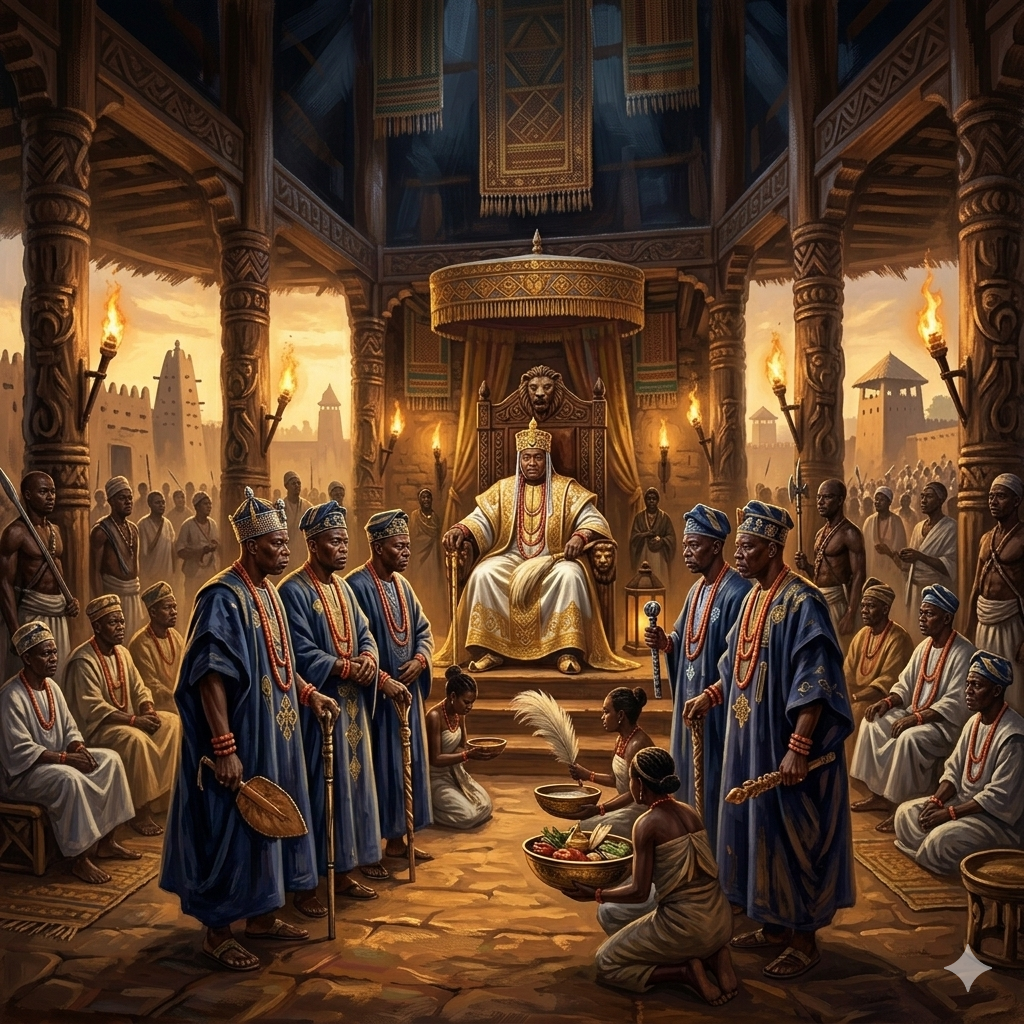
Military power was the foundation of Oyo’s imperial reach, and the cavalry was its defining instrument. In a region where horses were not native — the tsetse fly belt made horse-rearing extremely difficult across much of sub-Saharan Africa — Oyo’s ability to build and maintain a large cavalry force was an extraordinary strategic achievement.
Horses were imported from the north, particularly from Hausaland and beyond, at great expense and effort. Oyo’s rulers treated this investment as a matter of state survival. Cavalry units were maintained, trained, and deployed with military discipline.
The result was a military force that gave Oyo decisive advantages in open terrain. Neighbouring states and kingdoms that relied on infantry could not easily respond to fast-moving cavalry attacks. This asymmetry allowed Oyo to project power across a wide geographic range and to extract tribute from states that recognised they could not win a direct military confrontation.
The royal cavalry of Oyo, known as Esin Oba, was not simply a military unit. It was a symbol of imperial authority. The sight of Oyo cavalry entering a territory carried both military and psychological weight. Tribute states understood the message clearly.
At peak military power, Oyo could mobilise an estimated 100,000 soldiers, including one of West Africa’s most formidable cavalry forces.
Trade Networks and Economic Power: How Oyo Built Wealth
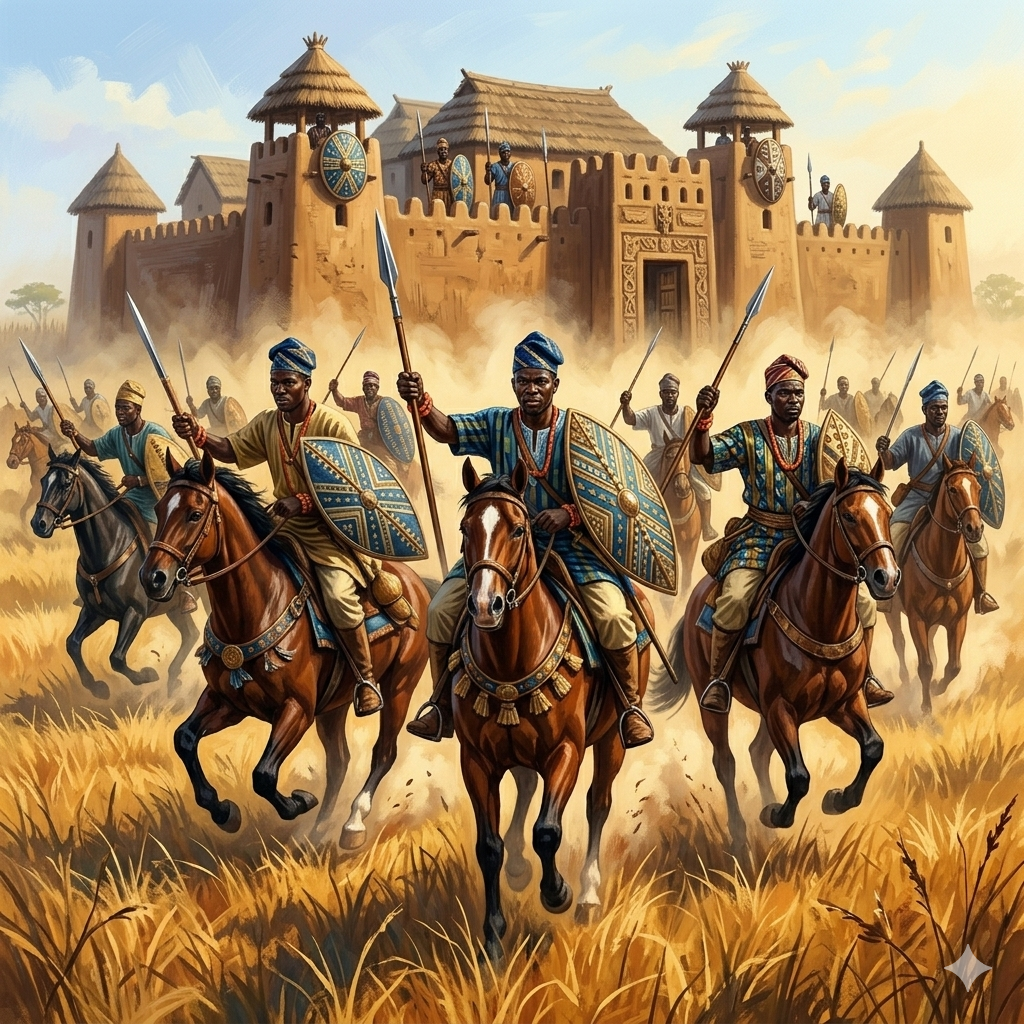
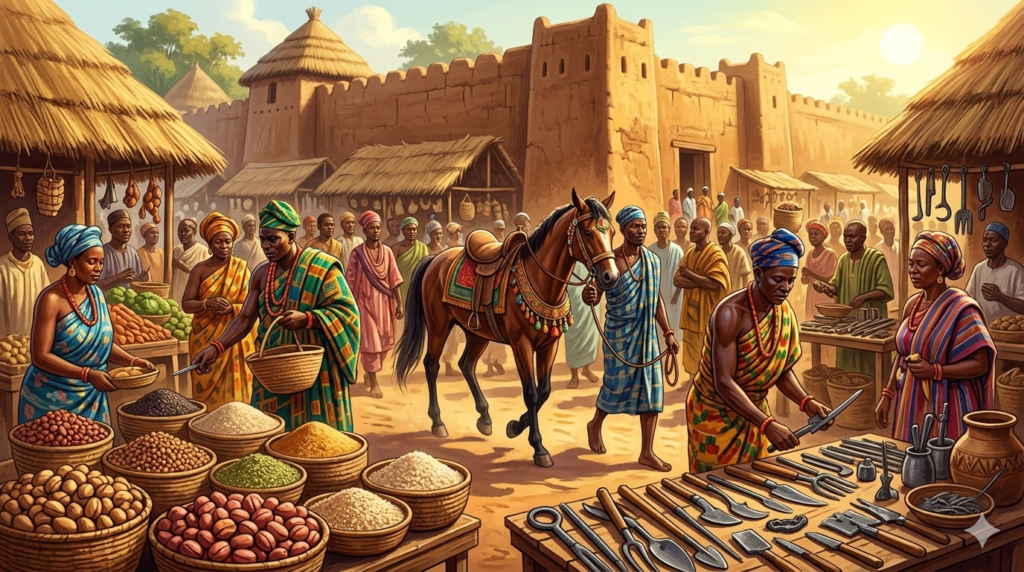
Empires are not sustained by military might alone. Behind Oyo’s political and military strength was a sophisticated economic engine. The empire sat at the intersection of multiple major trade routes, connecting the Saharan trade networks of the north with the coastal trade emerging in the south.
What Did Oyo Trade?
The major commodities flowing through Oyo’s trade networks included:
- Kola nuts — a high-value commodity across West Africa with religious, social, and trade significance
- Cloth and textiles — Yoruba weaving traditions produced cloth that was traded widely
- Horses — imported from the north and redistributed as a strategic resource
- Iron goods — tools and weapons produced by skilled Yoruba smiths
Control of trade routes meant control of revenue. The Oyo imperial structure levied tribute from vassal states and taxed trade passing through its territory. This economic infrastructure funded the cavalry, supported the administrative apparatus, and sustained the capital city of Oyo-Ile as a major urban centre.
The relationship between military power and economic control was symbiotic. The cavalry protected the trade routes; the trade routes funded the cavalry. This cycle was central to Oyo’s sustained dominance across nearly two centuries.
Oyo Culture: The Bata Drum, Sango, and the Living Heritage
Beyond governance and warfare, the Oyo Empire was a profound cultural force. Its artistic, religious, and musical traditions did not die with the empire. They survived, travelled, and transformed into living elements of global culture.
The Bata Drum: From Oyo to UNESCO
The Bata drum originated in the Oyo Empire. It was not simply a musical instrument — it was a sacred object, associated with the worship of Sango (the Yoruba deity of thunder and lightning) and used in royal ceremonies, religious rites, and cultural festivals.
Today, the Bata drum has been recognised as a UNESCO Intangible Cultural Heritage. Its influence spread far beyond Nigeria, carried by enslaved Yoruba people to Cuba, Brazil, and across the Caribbean, where it became foundational to Afro-Cuban music, Candomble traditions, and other syncretic religious and musical forms.
When you hear the percussion patterns in modern Afrobeats production, you are hearing the echo of Oyo. The rhythmic DNA of the empire lives in contemporary global music.
Sango: From Alaafin to Global Deity
Sango, the fourth Alaafin of Oyo, was deified after his death and became one of the most widely worshipped Yoruba deities. His worship spread across the Atlantic with the Yoruba diaspora and survives today in Candomble (Brazil), Santeria/Lucumi (Cuba), and Trinidad Orisha traditions. An Oyo king became a global spiritual presence.
Oyo Empire: A Timeline of Key Events
c. 1300
Founding of Oyo Kingdom
Traditional founding by Oranyan (Oranmiyan), son of Oduduwa. The kingdom is established in the north of Yorubaland.
1400s to 1500s
Exile and Rebuilding
Early Oyo faces pressure from Nupe and Borgu, leading to a period of displacement. The kingdom rebuilds its military capacity, investing heavily in cavalry.
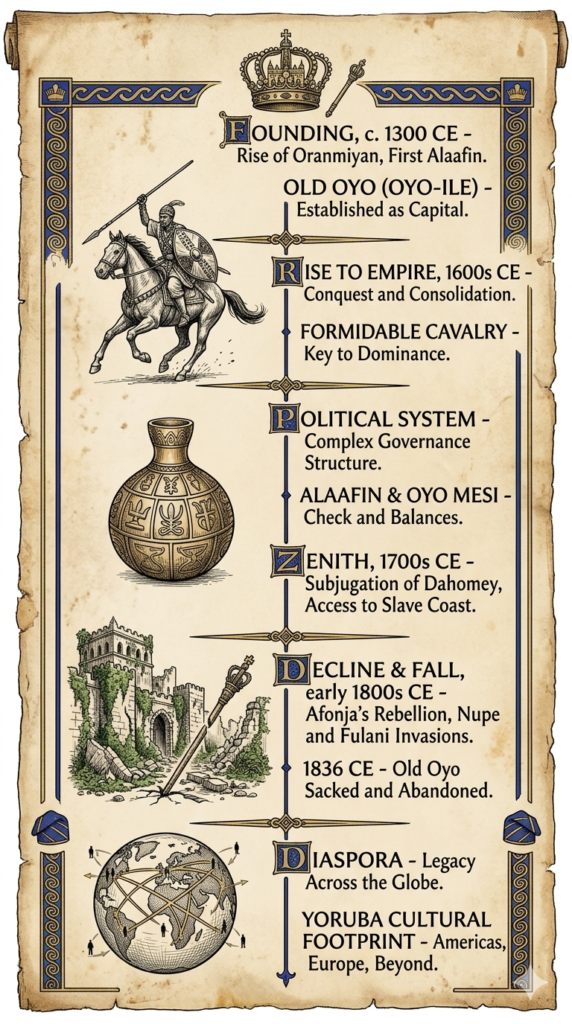
1600s
Rise to Imperial Power
Oyo expands dramatically under powerful Alaafin rulers. Cavalry dominance enables conquest of neighbouring states. The empire begins to collect tribute from Dahomey and others.
1700s
Peak of the Empire
The Oyo Empire reaches its greatest territorial and political extent. Trans-Saharan and coastal trade networks flourish. The Oyo political system is at its most refined.
Late 1700s
Signs of Strain
Internal political conflict intensifies. Powerful Bashorun Gaha dominates the Oyo Mesi and deposes multiple Alaafin. The constitutional system is strained by factional power struggles.
1796 to 1836
Collapse and Dispersal
The Fulani Jihad to the north and internal rebellions accelerate the empire’s fall. Oyo-Ile (the capital) is abandoned around 1836. The Yoruba diaspora begins in earnest.
1800s to Today
The Living Legacy
Yoruba culture, religion (Ifa, Sango, Oya), music (Bata drum), and identity spread globally. The empire is gone. The civilisation continues.
The Fall of the Oyo Empire: What Destroyed West Africa’s Greatest Kingdom?
The collapse of the Oyo Empire was not a single event but a process, driven by a combination of internal weaknesses and external pressures that converged in the late 18th and early 19th centuries.
Internal Political Conflict
The very constitutional system that made Oyo so sophisticated also created structural vulnerabilities. The tension between Alaafin authority and Oyo Mesi power was a permanent feature of Oyo politics. In the late 18th century, this tension escalated dramatically under Bashorun Gaha, a powerful chief who effectively hijacked the Oyo Mesi, deposing and executing multiple Alaafin. The political system became a battleground rather than a stabilising framework.
The Fulani Jihad
To the north, the early 19th century brought the Fulani Jihad led by Usman dan Fodio, which reshaped the political landscape of the region. Ilorin, an important Oyo province, fell under Fulani control and became a base of military pressure against the empire. Oyo found itself under sustained attack from a direction it could no longer easily defend.
Vassal Revolt
As Oyo’s military capacity was strained, vassal states that had long chafed under imperial authority began to assert independence. Dahomey, which had paid tribute to Oyo for generations, broke free. The empire’s territory shrank as the capacity to enforce compliance collapsed.
By approximately 1836, Oyo-Ile, the imperial capital, was abandoned. The empire as a political entity was finished. But what happened next is equally important.
The Oyo Diaspora: How a Fallen Empire Reshaped the World
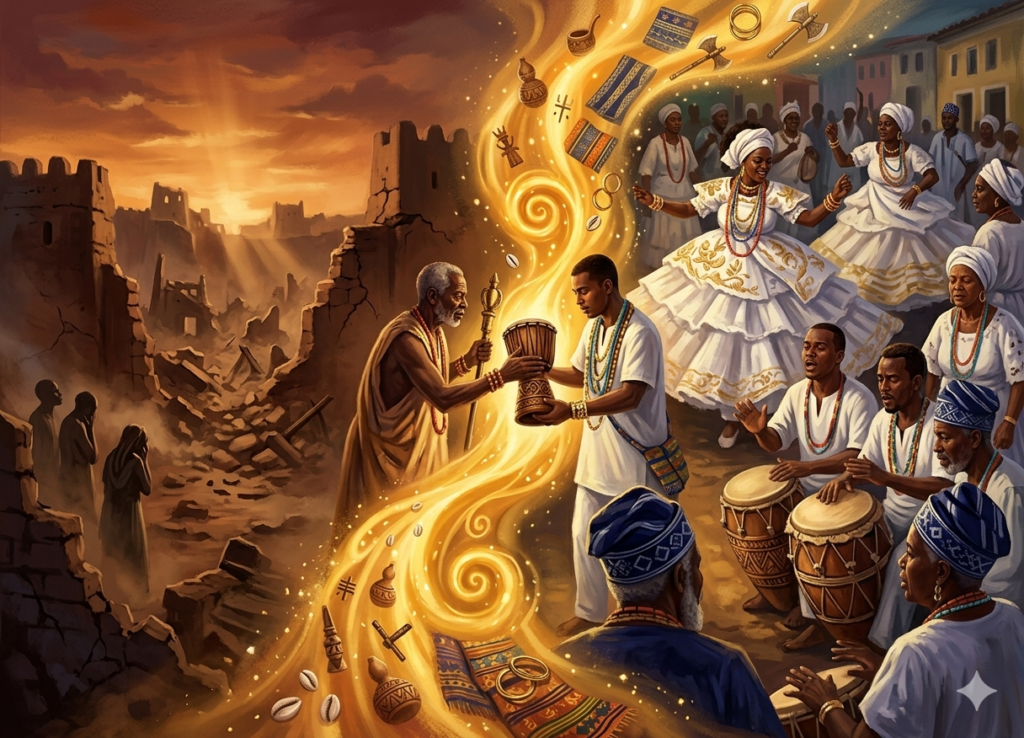
The fall of Oyo did not mean the disappearance of Oyo people or Oyo culture. It meant dispersal. As the capital was abandoned and the empire collapsed, Yoruba people moved southward into new cities like Ibadan and Abeokuta, and eventually, through the brutal mechanism of the Atlantic slave trade, across the ocean.
The Yoruba diaspora is one of the most culturally influential in the world. Yoruba religion, language, music, and art took root in Brazil (as Candomble), Cuba (as Lucumi/Santeria), Trinidad, Haiti, and across the Americas. Sango is worshipped in Rio. The Bata drum plays in Havana. Ifa divination is practised from Lagos to Los Angeles.
This is what it means to say that wherever you walk, the empire follows. The Oyo Empire did not merely leave ruins. It seeded civilisations.
The Oyo Empire scattered like seeds, and wherever they landed, something grew. The Yoruba diaspora is one of the great cultural forces of the modern world and Oyo is its root. — 24Modez Heritage Archive
Oyo Empire FAQs: What People Want to Know
Where was the Oyo Empire located?
The Oyo Empire was centred in the northern part of modern Yorubaland, in what is today Oyo State in southwestern Nigeria. At its peak, its territory extended westward into what is now Benin Republic and Togo.
Who was the Alaafin of Oyo?
The Alaafin (meaning “owner of the palace”) was the king and supreme ruler of the Oyo Empire. The title was hereditary within the ruling lineage. The Alaafin held both political and sacred authority, considered a divine representative on earth, though his power was checked by the Oyo Mesi council.
Why did the Oyo Empire fall?
The Oyo Empire fell due to a combination of internal political instability (factional power struggles within the Oyo Mesi), the Fulani Jihad that destabilised the northern frontier, and the breakdown of the tribute system as vassal states rebelled. By the 1830s, the capital Oyo-Ile was abandoned.
What is the legacy of the Oyo Empire today?
The legacy of the Oyo Empire survives in modern Yoruba culture, language, religion (particularly the Orisa tradition), the Bata drum (now a UNESCO heritage item), and the global Yoruba diaspora. Oyo’s cultural influence reaches Cuba, Brazil, Trinidad, and communities across the world.
What was the Oyo Mesi?
The Oyo Mesi was a council of seven senior chiefs led by the Bashorun. It served as the primary constitutional check on the power of the Alaafin, with the authority to ask a king to abdicate if he was deemed unfit to rule. It is one of the earliest documented systems of institutionalised checks on monarchical authority.
Did the Oyo Empire participate in the slave trade?
Yes. Like most major powers of the era, Ọ̀YỌ́ was involved in the slave trade, both the trans-Saharan trade and, from the 18th century, the transatlantic trade. Oyo supplied enslaved people to European traders at the coast, and scholars argue that the internal demand for tribute and the slave trade contributed to political tensions that ultimately destabilised the empire.

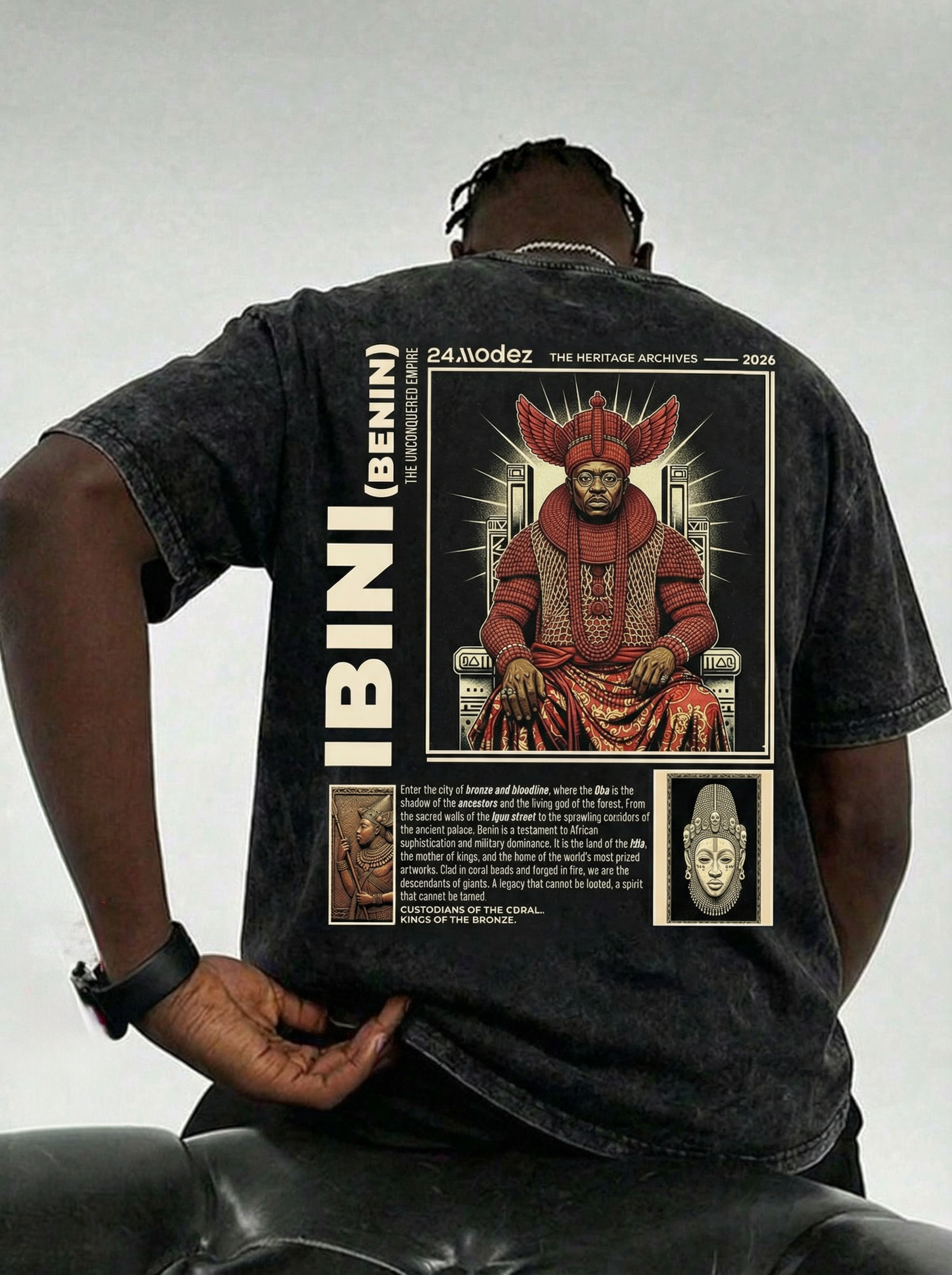
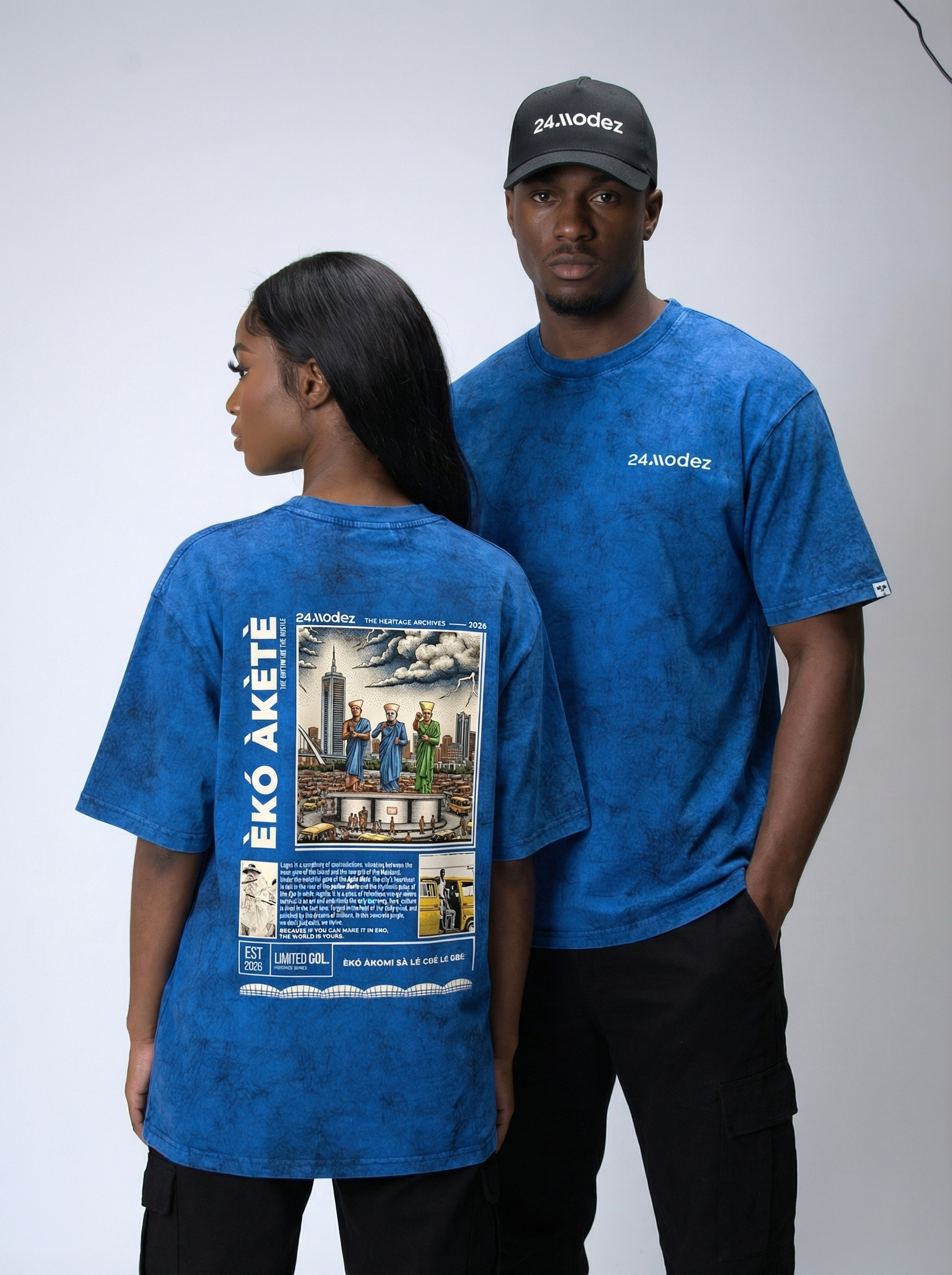
Wear the Archive. Carry the Empire.
We turned the Oyo Empire into a wearable archive. The OYO ILE Heritage Tee, limited edition,
made to order. Plus: download the full free heritage ebook.




Great content! Keep up the good work!